Skip to content
  • facebook.com
  • twitter.com
  • t.me
  • instagram.com
  • youtube.com
Chemical Engineering

Transforming Science. Engineering a Better World.

Subscribe
  • Home
  • Online Tools
  • Chemical Engineering App
  • Home
  • process optimization
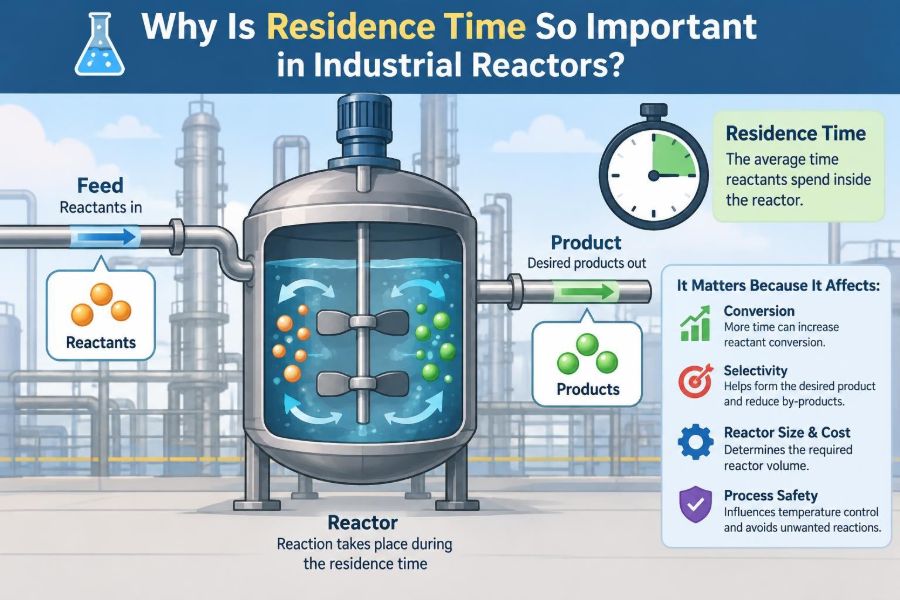
🧪 Why Is Residence Time So Important in Industrial Reactors?
Posted inFeatured

🧪 Why Is Residence Time So Important in Industrial Reactors?

Posted by admin November 16, 2026
A reactor’s size is only part of the story. See how residence time, mixing, bypassing, and heat transfer shape conversion, safety, and product quality. ⏱️⚗️🏭
Read More
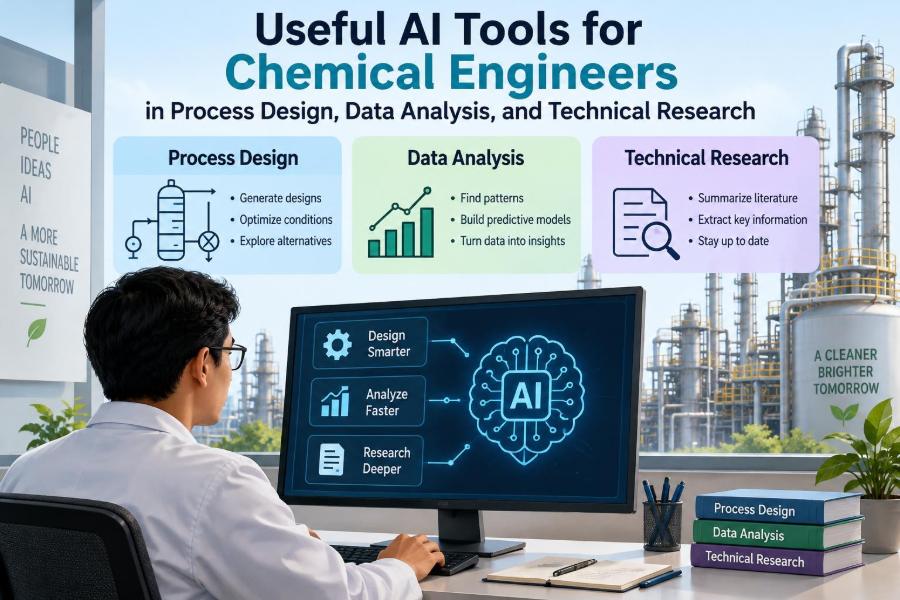
🧪 Useful AI Tools for Chemical Engineers in Process Design, Data Analysis, and Technical Research
Posted inFeatured

🧪 Useful AI Tools for Chemical Engineers in Process Design, Data Analysis, and Technical Research

Posted by admin November 6, 2026
From process simulations to lab data and literature searches, learn where AI can save time—and where rigorous engineering checks must stay in charge. ⚙️📊🧠
Read More
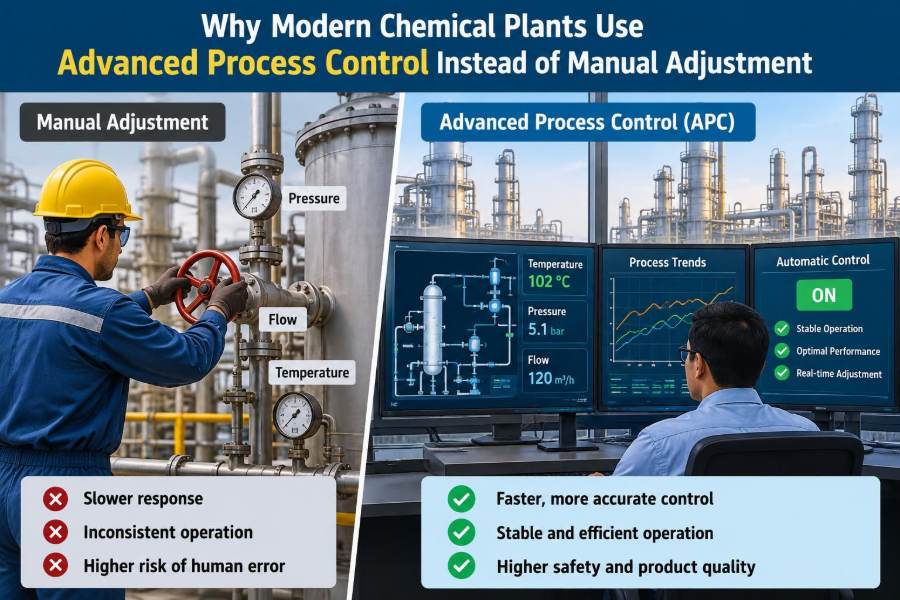
🧪 Why Modern Chemical Plants Use Advanced Process Control Instead of Manual Adjustment
Posted inFeatured

🧪 Why Modern Chemical Plants Use Advanced Process Control Instead of Manual Adjustment

Posted by admin October 27, 2026
Modern plants juggle delays, interacting variables, quality limits, and energy constraints. See why APC supports better operating decisions without replacing operators. ⚙️📈🏭
Read More
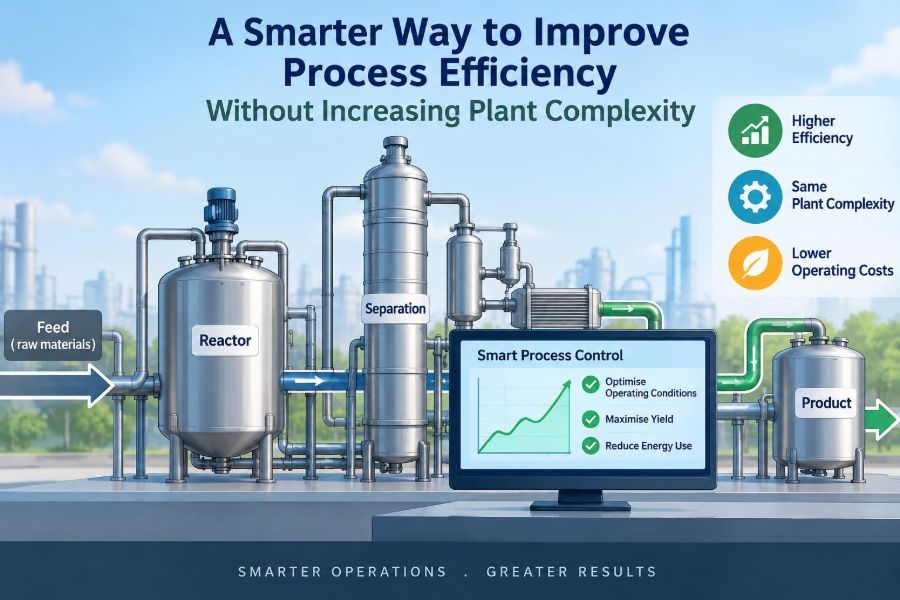
🧪 A Smarter Way to Improve Process Efficiency Without Increasing Plant Complexity
Posted inFeatured

🧪 A Smarter Way to Improve Process Efficiency Without Increasing Plant Complexity

Posted by admin October 27, 2026
Many process losses come from variability, weak measurements, and hidden constraints—not missing hardware. Learn a practical route to better yield, energy use, and stability. ⚙️📊🌱
Read More
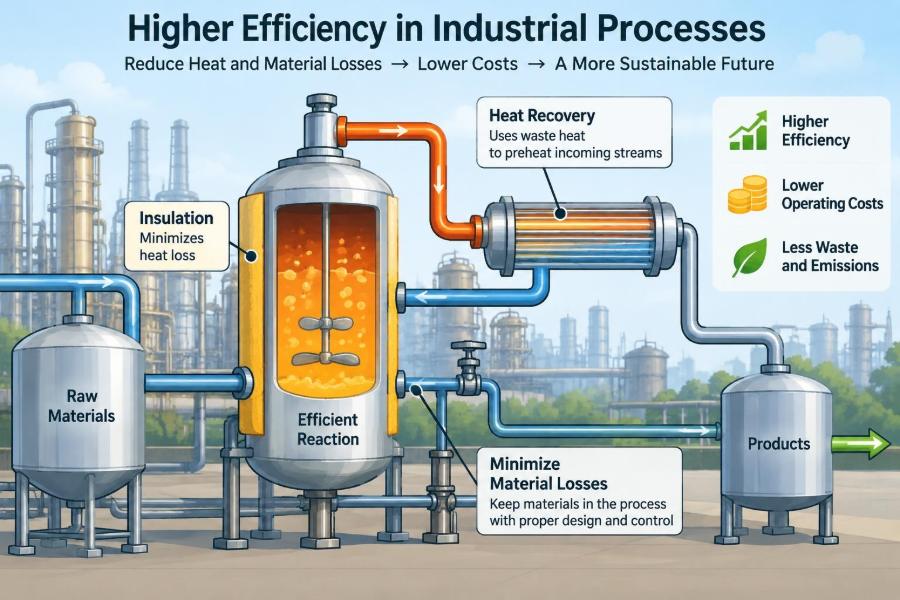
🧪 How to Make an Industrial Process More Efficient by Reducing Heat and Material Losses
Posted inFeatured

🧪 How to Make an Industrial Process More Efficient by Reducing Heat and Material Losses

Posted by admin October 19, 2026
Steam leaks, fouled exchangers, vapor losses, and off-spec product all add up. Learn a practical framework for finding, prioritizing, and reducing them safely. ♻️⚙️🔍
Read More
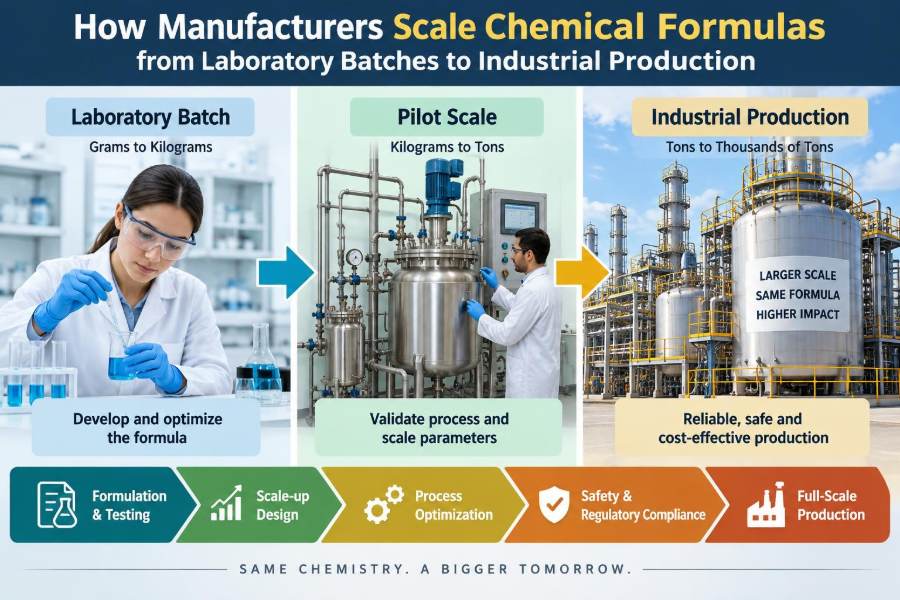
🧪 How Manufacturers Scale Chemical Formulas from Laboratory Batches to Industrial Production
Posted inFeatured

🧪 How Manufacturers Scale Chemical Formulas from Laboratory Batches to Industrial Production

Posted by admin October 18, 2026
A bigger reactor changes heat flow, mixing, safety, and quality control. Learn how engineers turn a promising bench formula into reliable industrial production. 🏭⚗️📈
Read More
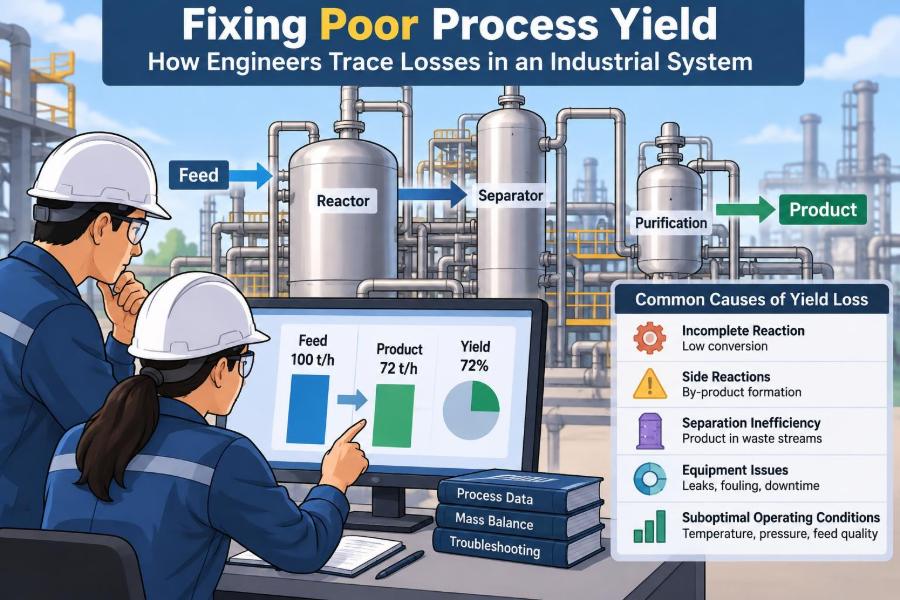
🧪 Fixing Poor Process Yield: How Engineers Trace Losses in an Industrial System
Posted inFeatured

🧪 Fixing Poor Process Yield: How Engineers Trace Losses in an Industrial System

Posted by admin October 15, 2026
A low yield is not always a reactor problem. Learn how to trace product through reactions, separations, holdup, waste streams, and data gaps—before choosing a fix. ⚖️🏭🔍
Read More
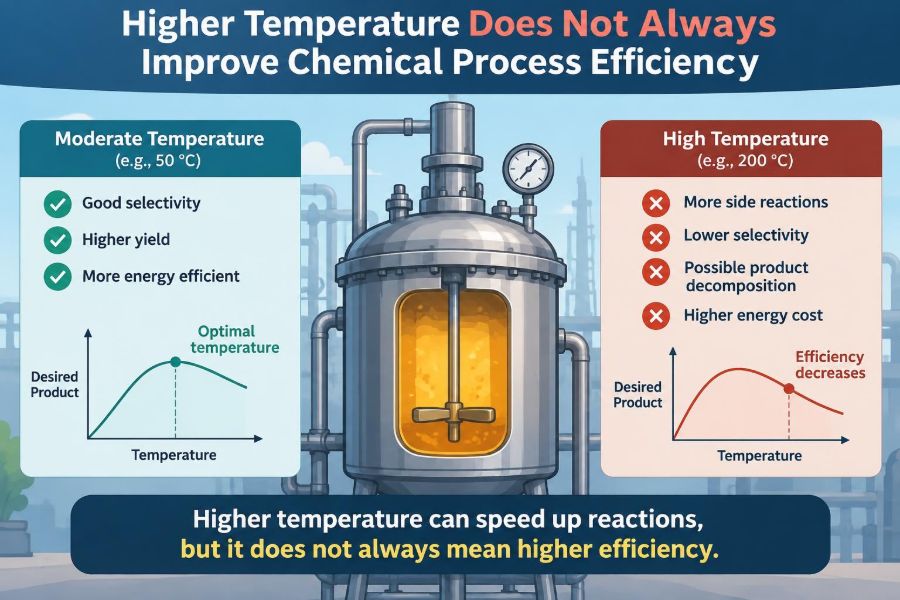
🧪 Debunking the Myth That Higher Temperature Always Improves Chemical Process Efficiency
Posted inFeatured

🧪 Debunking the Myth That Higher Temperature Always Improves Chemical Process Efficiency

Posted by admin October 15, 2026
Higher temperature can speed reactions—but it may also hurt yield, equilibrium, catalysts, safety, and energy use. Learn what engineers must check before raising the setpoint. ⚗️📉⚙️
Read More
🧪 How Chemical Plants Calculate Whether an Efficiency Upgrade Is Worth the Investment
Posted inFeatured

🧪 How Chemical Plants Calculate Whether an Efficiency Upgrade Is Worth the Investment

Posted by admin October 10, 2026
A lower utility bill is only the start. Learn how plants test savings, downtime, risk, and cash flow before approving an upgrade. ⚙️📊💰
Read More
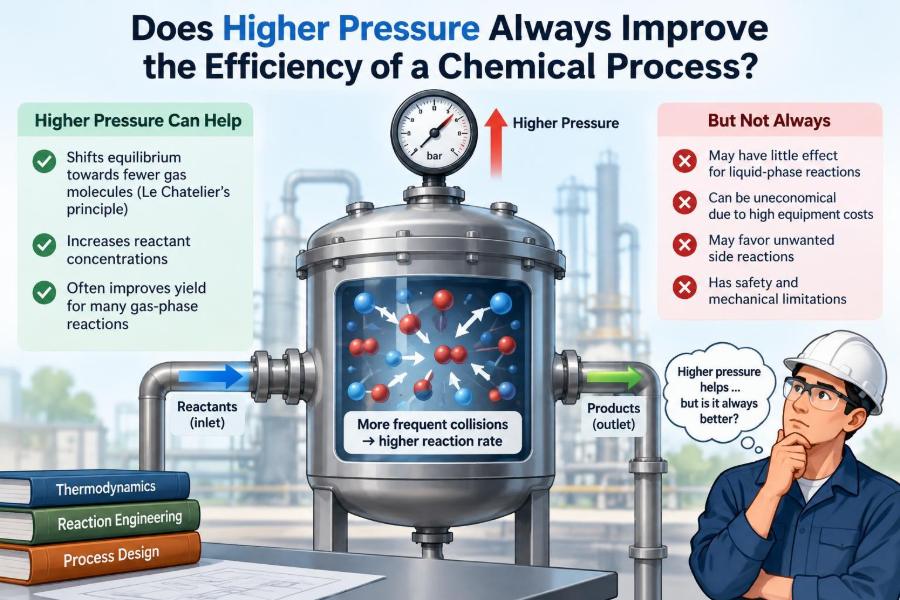
🧪 Does Higher Pressure Always Improve the Efficiency of a Chemical Process?
Posted inFeatured

🧪 Does Higher Pressure Always Improve the Efficiency of a Chemical Process?

Posted by admin October 8, 2026
Higher pressure can boost conversion, but it can also raise energy use, equipment costs, and safety demands. See how engineers find the real operating sweet spot. ⚙️📈🧪
Read More

Posts pagination

1 2 Next page

Recent Posts

  • 🧪 Who Decides the Safe Operating Limits Inside a Chemical Processing Plant?
  • 🧪 The Evolution of Industrial Separation: From Simple Distillation to Advanced Membrane Systems
  • 🧪 Why Is Residence Time So Important in Industrial Reactors?
  • 🧪 How Long Should a Chemical Stay Inside a Reactor for the Desired Conversion?
  • 🧪 Dealing With Foaming in Industrial Processes: Causes, Risks, and Control Methods

Recent Comments

No comments to show.

Archives

  • November 2026
  • October 2026
  • September 2026
  • August 2026
  • March 2025
  • February 2025
  • February 2022
  • January 2022
  • November 2021
  • October 2021
  • August 2021

Categories

  • advanced_concepts
  • Chemical Engineering Softwares
  • Chemical Process Calculation
  • Featured
  • General Concepts
  • heat transfer
  • Mass Transfer
  • Material Science
  • Mechanics of Solids
  • Mineral Processing
  • NanoTechnology
  • Organic Chemistry
  • Physical Chemistry
  • Quality Management
  • Uncategorized
Copyright 2026 — Chemical Engineering. All rights reserved. Bloghash WordPress Theme
Scroll to Top