Skip to content
  • facebook.com
  • twitter.com
  • t.me
  • instagram.com
  • youtube.com
Chemical Engineering

Transforming Science. Engineering a Better World.

Subscribe
  • Home
  • Online Tools
  • Chemical Engineering App
  • Home
  • mass transfer
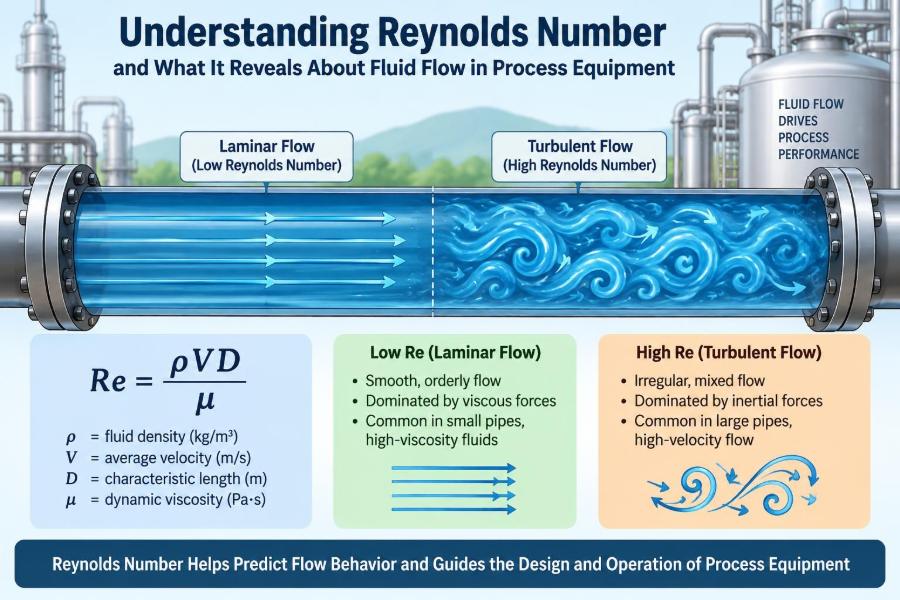
🧪 Understanding Reynolds Number and What It Reveals About Fluid Flow in Process Equipment
Posted inFeatured

🧪 Understanding Reynolds Number and What It Reveals About Fluid Flow in Process Equipment

Posted by admin November 12, 2026
From pipe pressure drop to heat-exchanger performance, Reynolds number explains why fluids behave differently in equipment. Learn the calculations, limits, and design clues. 🌊⚙️📐
Read More
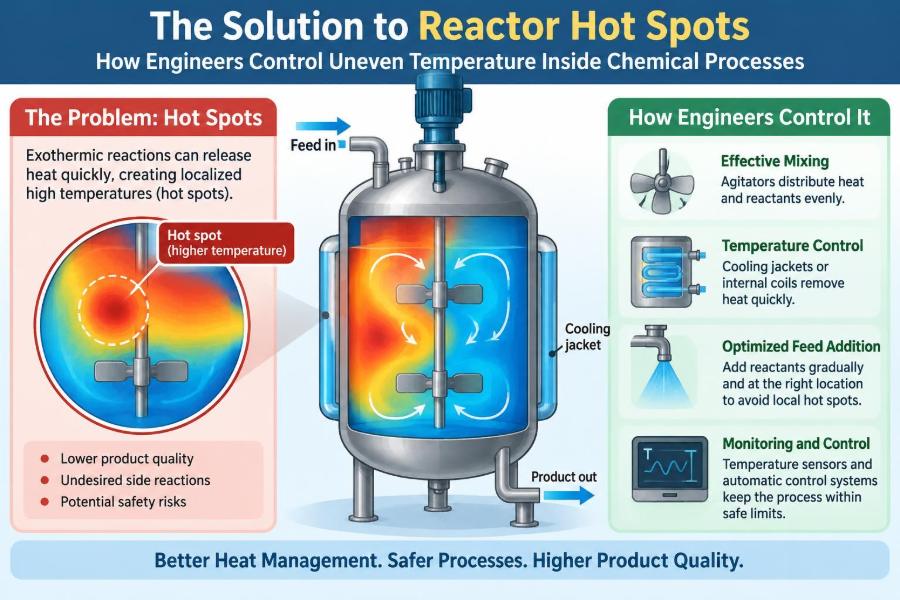
🧪 The Solution to Reactor Hot Spots: How Engineers Control Uneven Temperature Inside Chemical Processes
Posted inFeatured

🧪 The Solution to Reactor Hot Spots: How Engineers Control Uneven Temperature Inside Chemical Processes

Posted by admin November 12, 2026
A normal average temperature can conceal a dangerous local hot spot. Learn how mixing, feed placement, cooling, sensors, and safeguards work together to control it. ⚙️🔥🧪
Read More
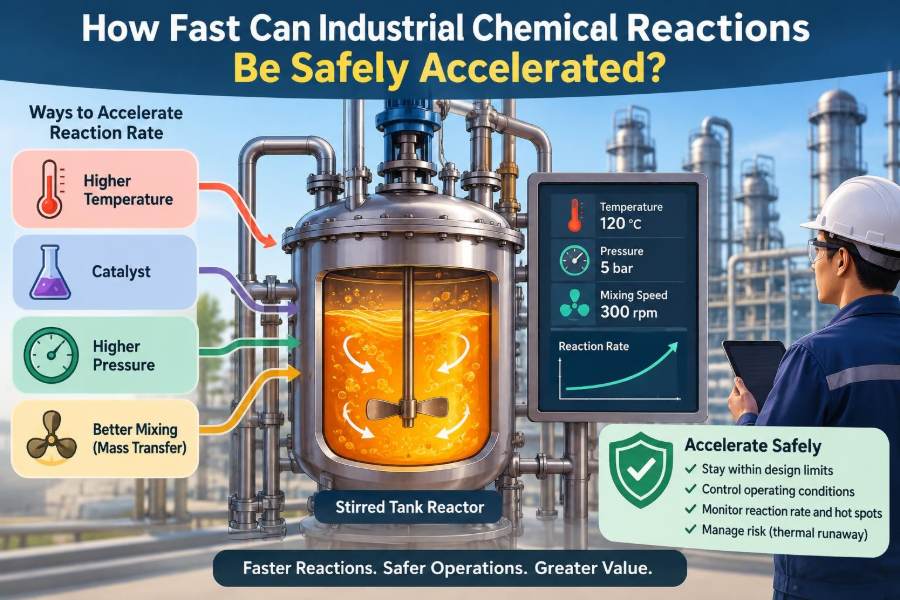
🧪 How Fast Can Industrial Chemical Reactions Be Safely Accelerated?
Posted inFeatured

🧪 How Fast Can Industrial Chemical Reactions Be Safely Accelerated?

Posted by admin November 9, 2026
Faster reactions can boost output—or overwhelm cooling, mixing, and controls. Learn how engineers find a productive rate with a real safety margin. 🌡️🏭⚗️
Read More
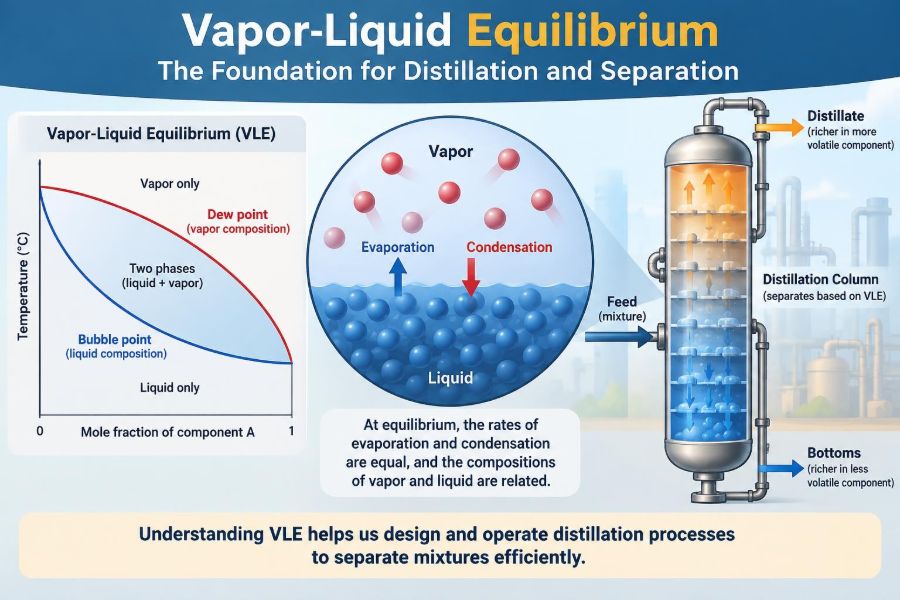
🧪 Explaining Vapor-Liquid Equilibrium: Why It Matters in Distillation and Separation
Posted inFeatured

🧪 Explaining Vapor-Liquid Equilibrium: Why It Matters in Distillation and Separation

Posted by admin November 5, 2026
See how vapor-liquid equilibrium shapes flash drums, reflux, azeotropes, column pressure, and product purity. Turn phase diagrams into practical separation insight. 🌡️⚙️📊
Read More
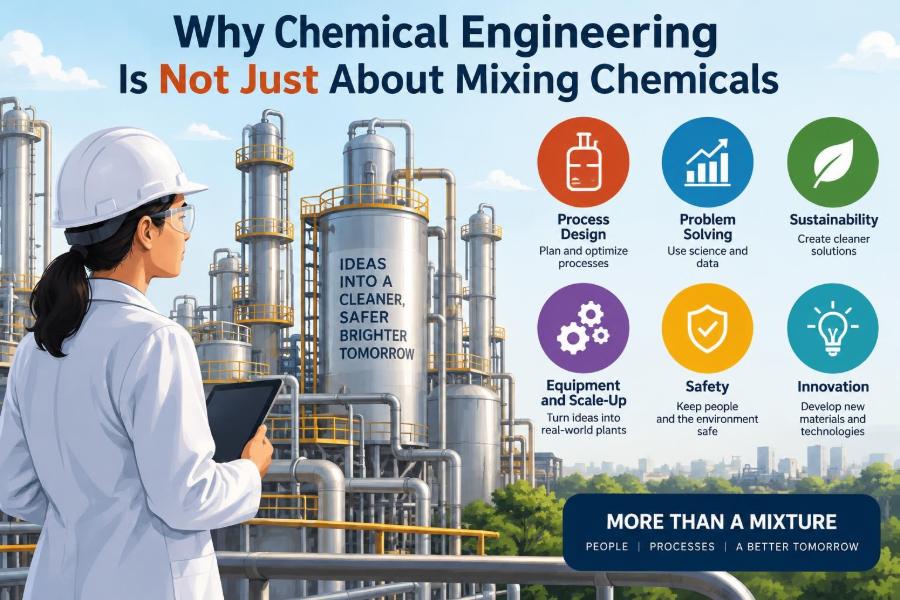
🧪 Why Chemical Engineering Is Not Just About Mixing Chemicals
Posted inFeatured

🧪 Why Chemical Engineering Is Not Just About Mixing Chemicals

Posted by admin October 31, 2026
From reactor heat to water treatment and battery materials, see what chemical engineers actually design—and why mixing is only one small part. ⚙️🌍🧪
Read More
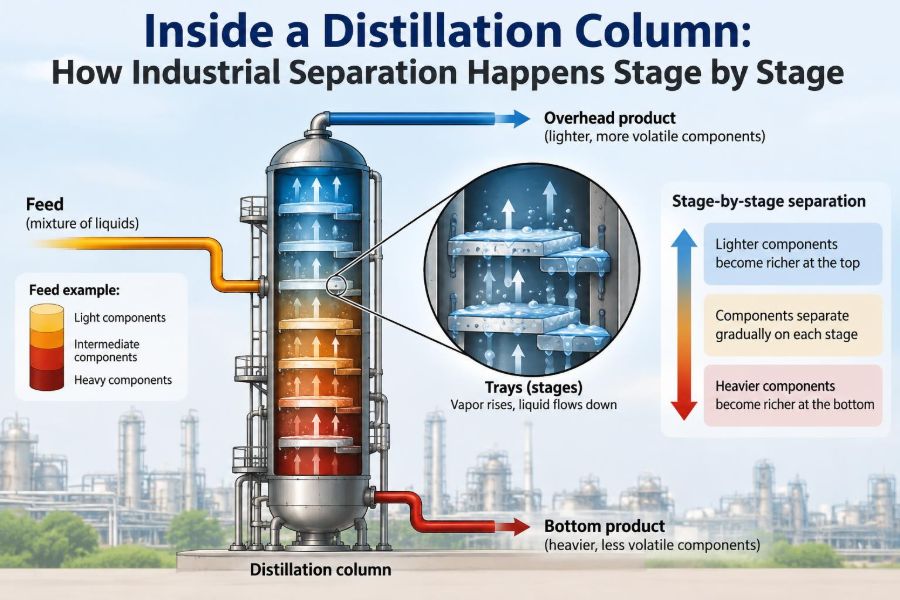
🧪 Inside a Distillation Column: How Industrial Separation Happens Stage by Stage
Posted inFeatured

🧪 Inside a Distillation Column: How Industrial Separation Happens Stage by Stage

Posted by admin October 29, 2026
Follow vapor and liquid through trays, packing, reflux, and reboilers to see how tiny equilibrium shifts become industrial-scale separation. ⚙️🌡️🏭
Read More
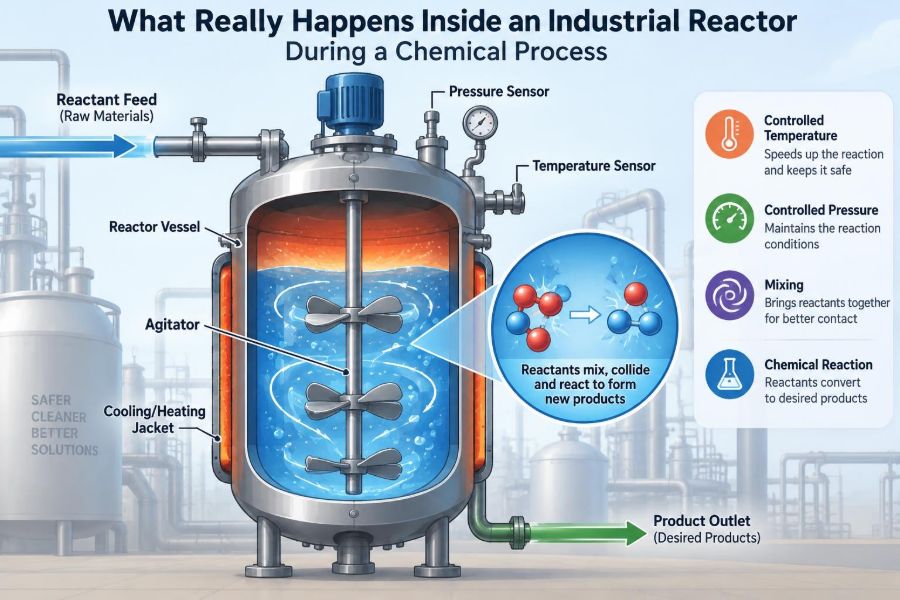
🧪 What Really Happens Inside an Industrial Reactor During a Chemical Process
Posted inFeatured

🧪 What Really Happens Inside an Industrial Reactor During a Chemical Process

Posted by admin October 22, 2026
From molecular collisions to heat removal and control loops, see why an industrial reactor is far more than a tank. Learn the forces that shape yield, quality, and safety. ⚗️🌡️⚙️
Read More
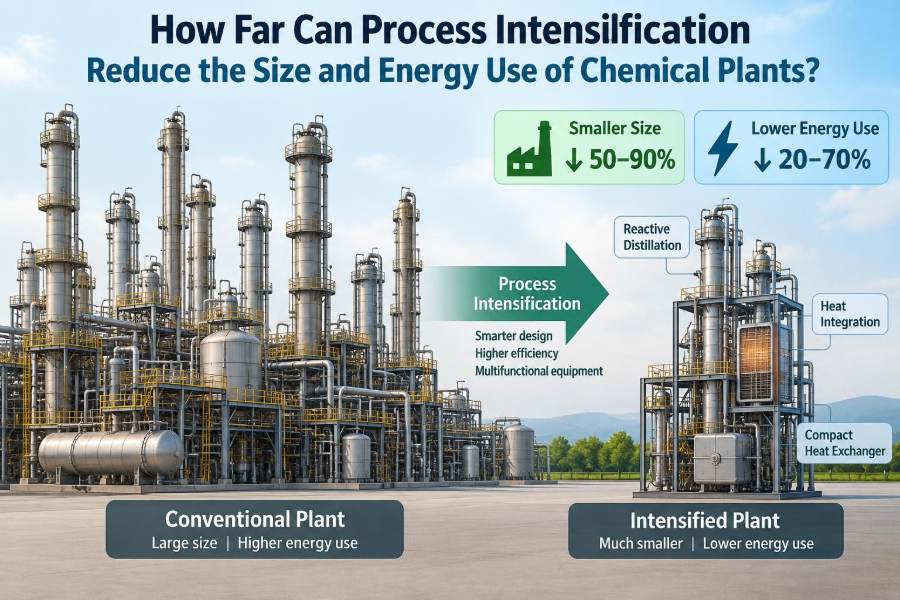
🧪 How Far Can Process Intensification Reduce the Size and Energy Use of Chemical Plants?
Posted inFeatured

🧪 How Far Can Process Intensification Reduce the Size and Energy Use of Chemical Plants?

Posted by admin October 20, 2026
Compact reactors, integrated separations, and smarter heat recovery can reshape plant design—but where do fouling, control, and thermodynamics set the limits? Explore the trade-offs. 🌍🔬
Read More
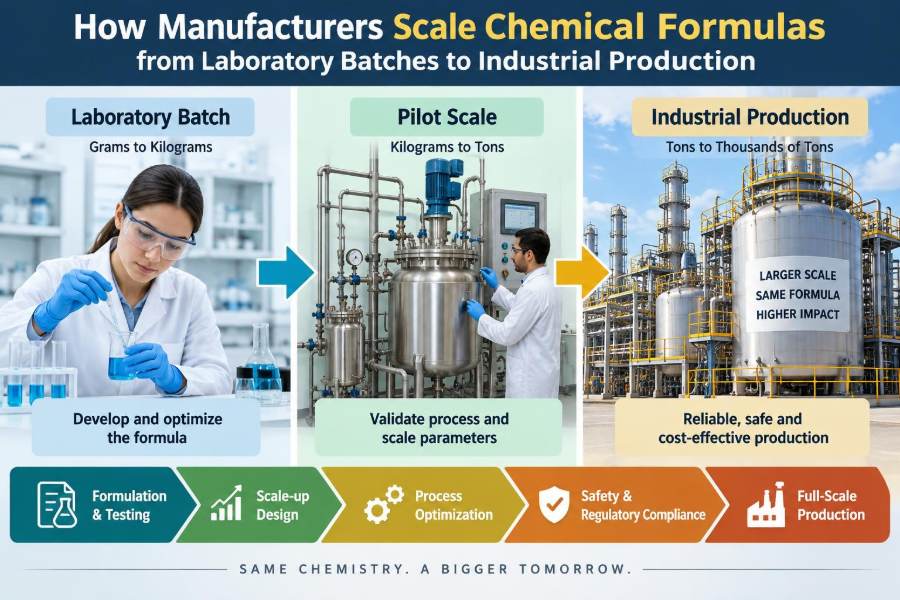
🧪 How Manufacturers Scale Chemical Formulas from Laboratory Batches to Industrial Production
Posted inFeatured

🧪 How Manufacturers Scale Chemical Formulas from Laboratory Batches to Industrial Production

Posted by admin October 18, 2026
A bigger reactor changes heat flow, mixing, safety, and quality control. Learn how engineers turn a promising bench formula into reliable industrial production. 🏭⚗️📈
Read More
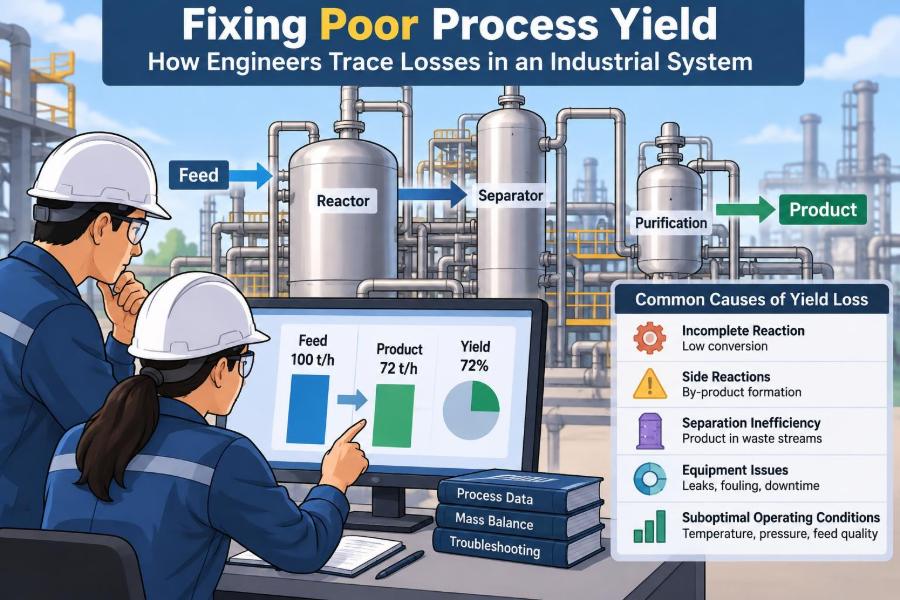
🧪 Fixing Poor Process Yield: How Engineers Trace Losses in an Industrial System
Posted inFeatured

🧪 Fixing Poor Process Yield: How Engineers Trace Losses in an Industrial System

Posted by admin October 15, 2026
A low yield is not always a reactor problem. Learn how to trace product through reactions, separations, holdup, waste streams, and data gaps—before choosing a fix. ⚖️🏭🔍
Read More

Posts pagination

1 2 3 Next page

Recent Posts

  • 🧪 Understanding Reynolds Number and What It Reveals About Fluid Flow in Process Equipment
  • 🧪 The Solution to Reactor Hot Spots: How Engineers Control Uneven Temperature Inside Chemical Processes
  • 🧪 Real-World Uses of Adsorption in Water Purification, Gas Processing, and Pollution Control
  • 🧪 Breaking Down a Chemical Process: From Raw Materials to Final Product
  • 🧪 What Determines the Price of Industrial Chemicals and Raw Materials?

Recent Comments

No comments to show.

Archives

  • November 2026
  • October 2026
  • September 2026
  • August 2026
  • March 2025
  • February 2025
  • February 2022
  • January 2022
  • November 2021
  • October 2021
  • August 2021

Categories

  • advanced_concepts
  • Chemical Engineering Softwares
  • Chemical Process Calculation
  • Featured
  • General Concepts
  • heat transfer
  • Mass Transfer
  • Material Science
  • Mechanics of Solids
  • Mineral Processing
  • NanoTechnology
  • Organic Chemistry
  • Physical Chemistry
  • Quality Management
  • Uncategorized
Copyright 2026 — Chemical Engineering. All rights reserved. Bloghash WordPress Theme
Scroll to Top