Skip to content
  • facebook.com
  • twitter.com
  • t.me
  • instagram.com
  • youtube.com
Chemical Engineering

Transforming Science. Engineering a Better World.

Subscribe
  • Home
  • Online Tools
  • Chemical Engineering App
  • Home
  • mass transfer
  • Page 2
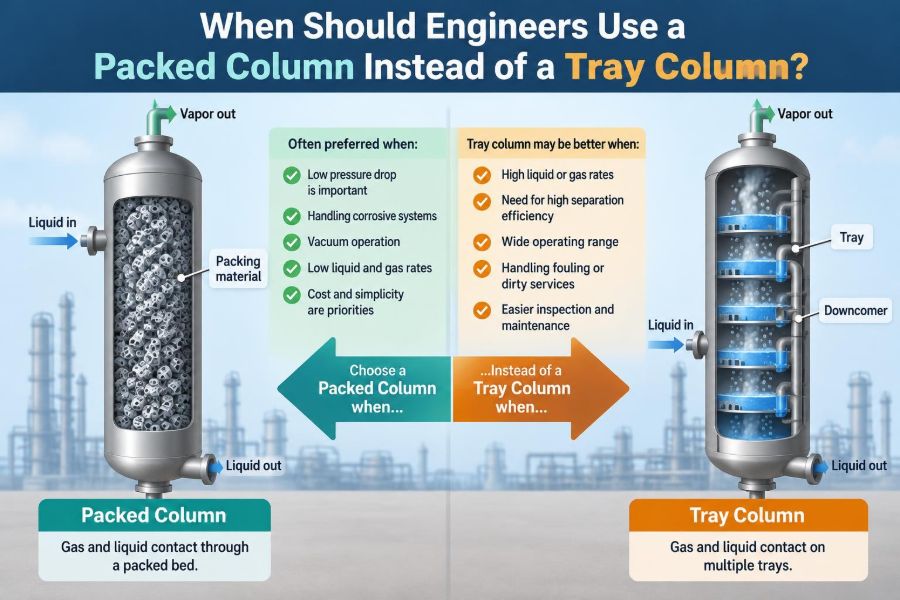
🧪 When Should Engineers Use a Packed Column Instead of a Tray Column?
Posted inFeatured

🧪 When Should Engineers Use a Packed Column Instead of a Tray Column?

Posted by admin October 9, 2026
Low pressure drop can make packing the clear winner—but fouling and poor distribution can reverse the result. Learn the design questions that decide it. 🏭📊🧪
Read More
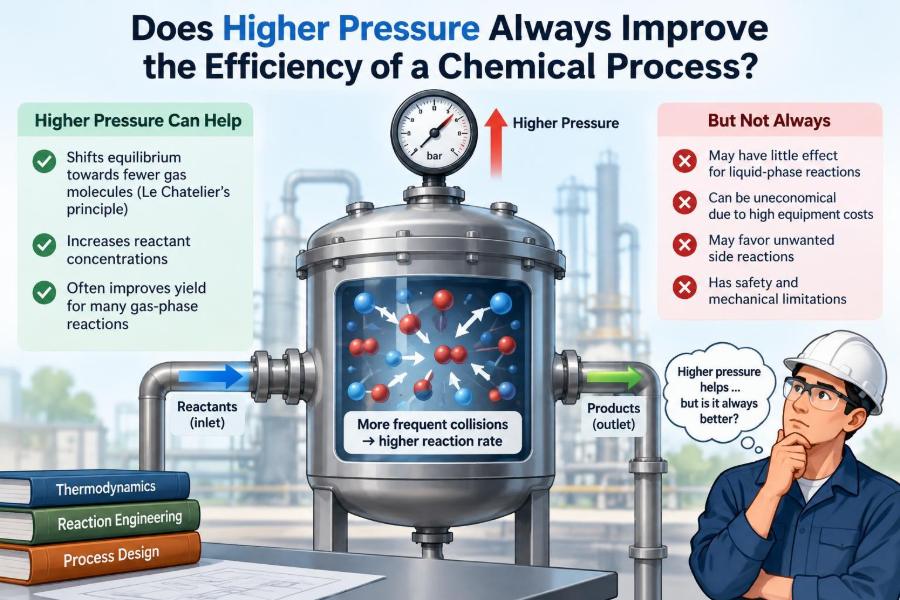
🧪 Does Higher Pressure Always Improve the Efficiency of a Chemical Process?
Posted inFeatured

🧪 Does Higher Pressure Always Improve the Efficiency of a Chemical Process?

Posted by admin October 8, 2026
Higher pressure can boost conversion, but it can also raise energy use, equipment costs, and safety demands. See how engineers find the real operating sweet spot. ⚙️📈🧪
Read More
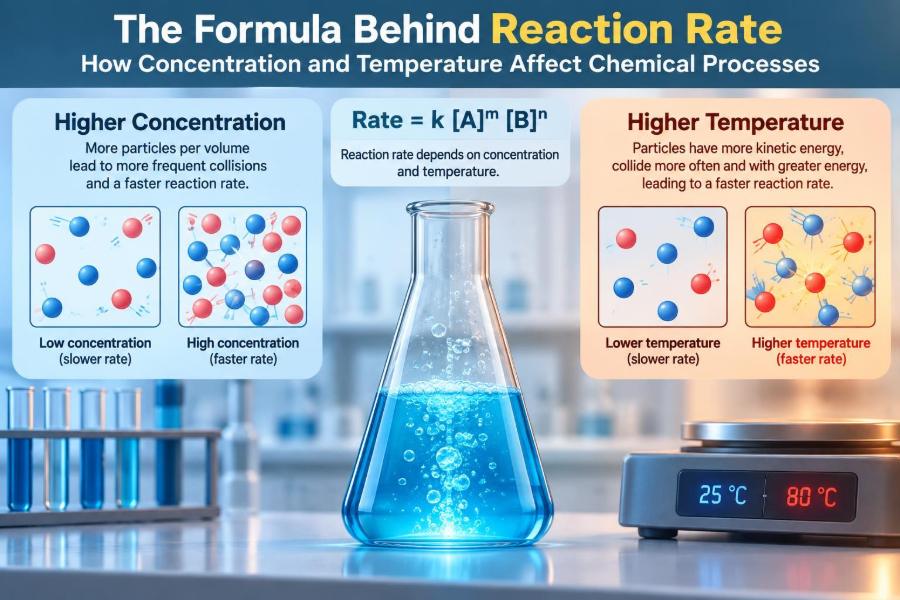
🧪 The Formula Behind Reaction Rate: How Concentration and Temperature Affect Chemical Processes
Posted inFeatured

🧪 The Formula Behind Reaction Rate: How Concentration and Temperature Affect Chemical Processes

Posted by admin October 6, 2026
See how concentration, temperature, activation energy, and mixing shape reaction rates—and why a faster reaction can create new design and safety challenges. ⚙️🔥🧫
Read More
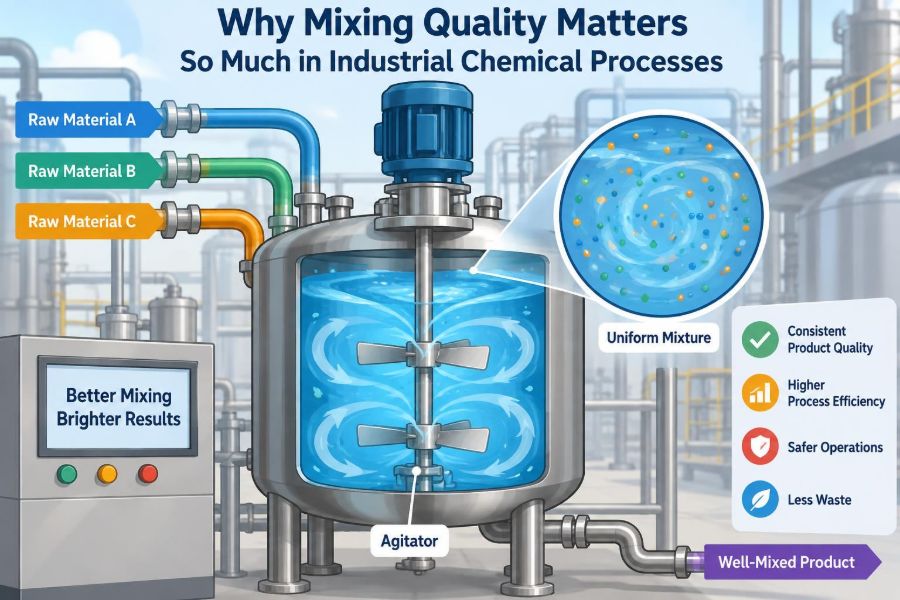
🧪 Why Mixing Quality Matters So Much in Industrial Chemical Processes
Posted inFeatured

🧪 Why Mixing Quality Matters So Much in Industrial Chemical Processes

Posted by admin October 5, 2026
A moving liquid can still hide hot spots, settling solids, and reactive concentration zones. Learn what mixing quality controls in real chemical processes. 🧪🌡️🔄
Read More
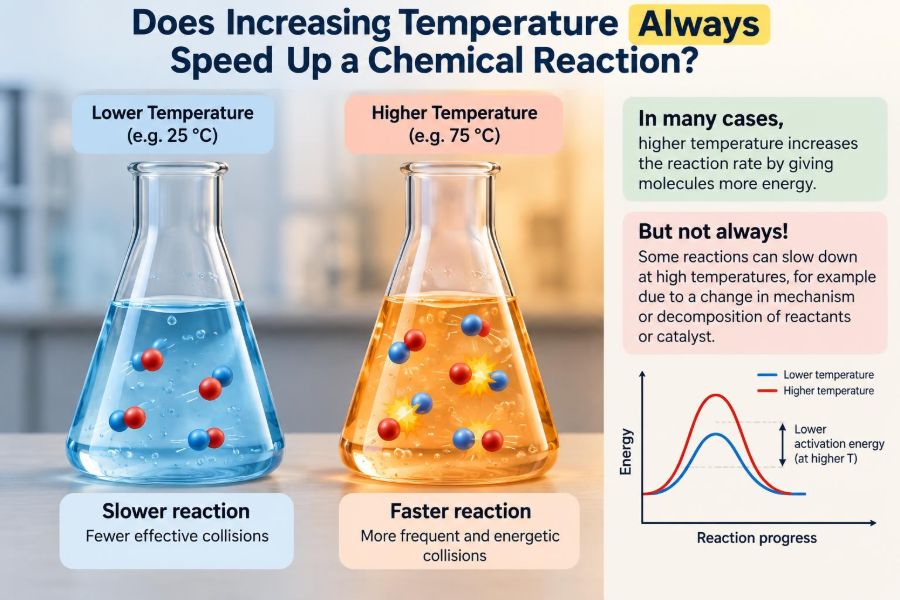
🧪 Does Increasing Temperature Always Speed Up a Chemical Reaction?
Posted inFeatured

🧪 Does Increasing Temperature Always Speed Up a Chemical Reaction?

Posted by admin October 3, 2026
Higher temperature often raises reaction rates—but equilibrium, catalysts, side reactions, and heat transfer can change the outcome. Learn what really controls performance. ⚗️🔥🏭
Read More
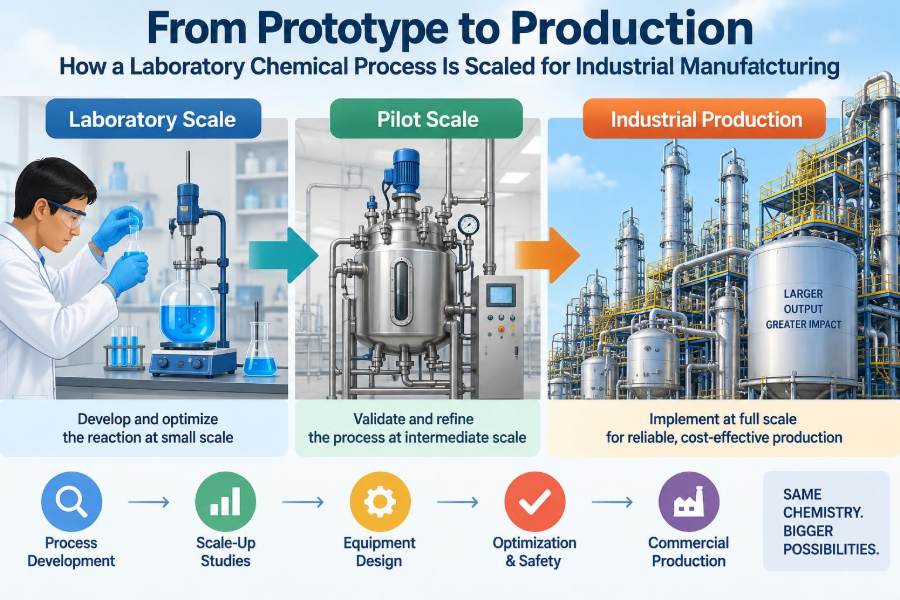
🧪 From Prototype to Production: How a Laboratory Chemical Process Is Scaled for Industrial Manufacturing
Posted inFeatured

🧪 From Prototype to Production: How a Laboratory Chemical Process Is Scaled for Industrial Manufacturing

Posted by admin October 3, 2026
A bigger reactor is not just a bigger flask. Explore the heat, mixing, separation, safety, quality, and control challenges behind industrial chemical scale-up. 🏭🌡️🧪
Read More
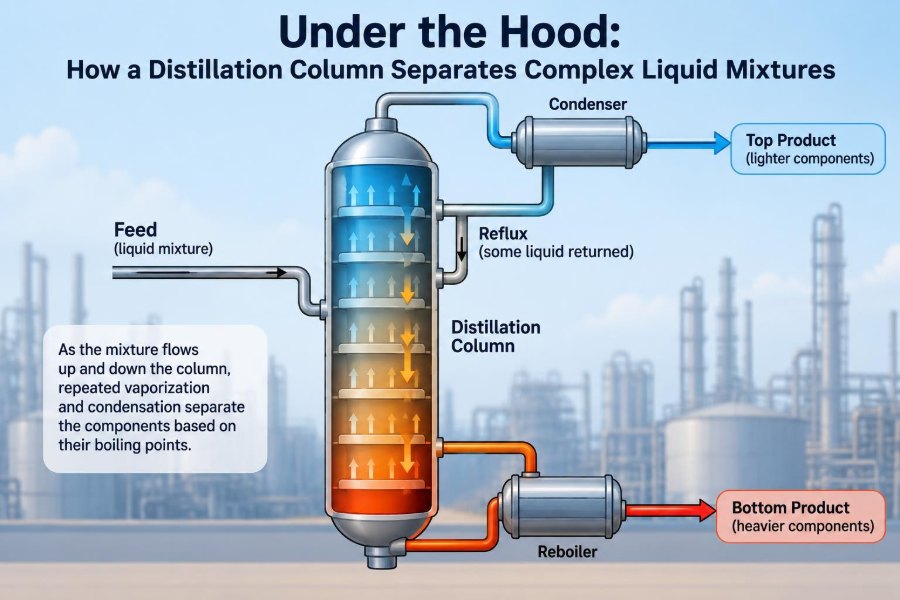
🧪 Under the Hood: How a Distillation Column Separates Complex Liquid Mixtures
Posted inFeatured

🧪 Under the Hood: How a Distillation Column Separates Complex Liquid Mixtures

Posted by admin September 29, 2026
Follow vapor and liquid through trays, packing, reflux, and reboilers—and learn why pressure, heat, and hydraulics decide whether a separation works. ⚙️🌡️🔍
Read More
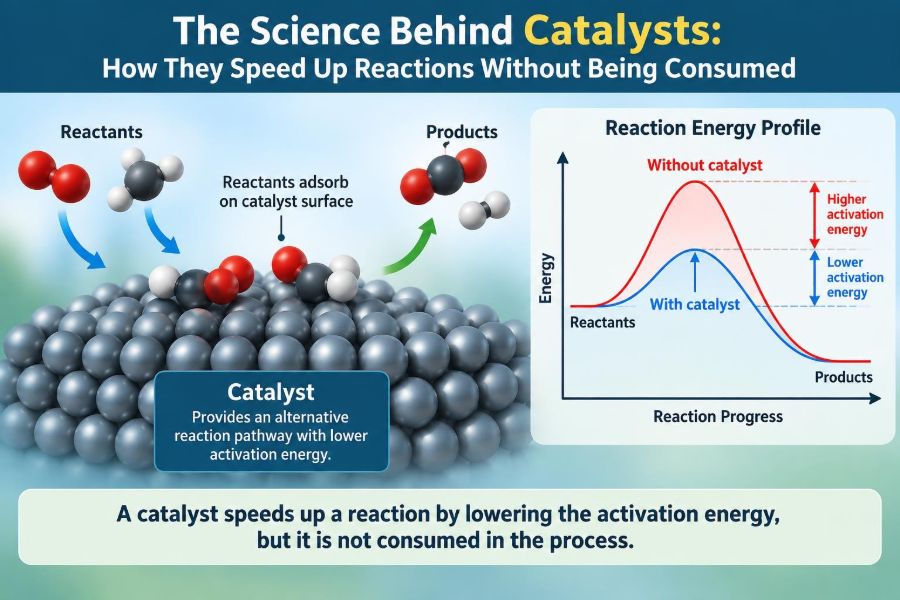
🧪 The Science Behind Catalysts: How They Speed Up Reactions Without Being Consumed
Posted inFeatured

🧪 The Science Behind Catalysts: How They Speed Up Reactions Without Being Consumed

Posted by admin September 26, 2026
From enzymes and catalytic converters to refinery reactors, discover how catalysts lower energy barriers, what stops them working, and why reactor design matters. ⚗️🚗🏭
Read More
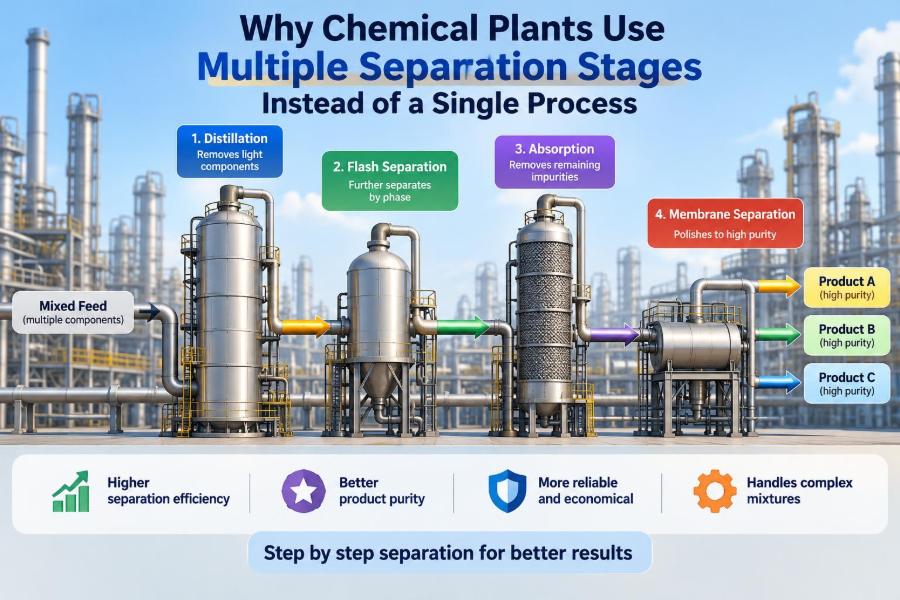
🧪 Why Chemical Plants Use Multiple Separation Stages Instead of a Single Process
Posted inFeatured

🧪 Why Chemical Plants Use Multiple Separation Stages Instead of a Single Process

Posted by admin September 23, 2026
From distillation and membranes to filters and adsorbents, see why chemical plants divide hard mixtures into manageable steps—and how that saves energy and protects product quality. 🔬🏭💧
Read More
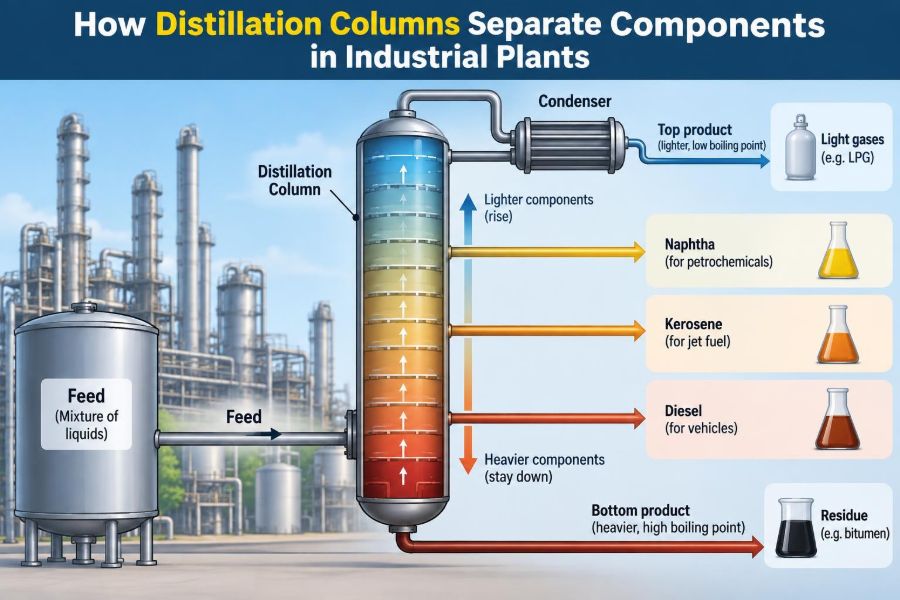
🧪 How Distillation Columns Separate Components in Industrial Plants
Posted inFeatured

🧪 How Distillation Columns Separate Components in Industrial Plants

Posted by admin September 18, 2026
Follow vapor and liquid through a distillation column, from reflux and reboilers to trays, packing, flooding, and product control. See why repeated contact drives separation. 🌡️⚗️🔄
Read More

Posts pagination

Previous page 1 2 3 Next page

Recent Posts

  • 🧪 Understanding Reynolds Number and What It Reveals About Fluid Flow in Process Equipment
  • 🧪 The Solution to Reactor Hot Spots: How Engineers Control Uneven Temperature Inside Chemical Processes
  • 🧪 Real-World Uses of Adsorption in Water Purification, Gas Processing, and Pollution Control
  • 🧪 Breaking Down a Chemical Process: From Raw Materials to Final Product
  • 🧪 What Determines the Price of Industrial Chemicals and Raw Materials?

Recent Comments

No comments to show.

Archives

  • November 2026
  • October 2026
  • September 2026
  • August 2026
  • March 2025
  • February 2025
  • February 2022
  • January 2022
  • November 2021
  • October 2021
  • August 2021

Categories

  • advanced_concepts
  • Chemical Engineering Softwares
  • Chemical Process Calculation
  • Featured
  • General Concepts
  • heat transfer
  • Mass Transfer
  • Material Science
  • Mechanics of Solids
  • Mineral Processing
  • NanoTechnology
  • Organic Chemistry
  • Physical Chemistry
  • Quality Management
  • Uncategorized
Copyright 2026 — Chemical Engineering. All rights reserved. Bloghash WordPress Theme
Scroll to Top