Skip to content
  • facebook.com
  • twitter.com
  • t.me
  • instagram.com
  • youtube.com
Chemical Engineering

Transforming Science. Engineering a Better World.

Subscribe
  • Home
  • Online Tools
  • Chemical Engineering App
  • Home
  • process safety
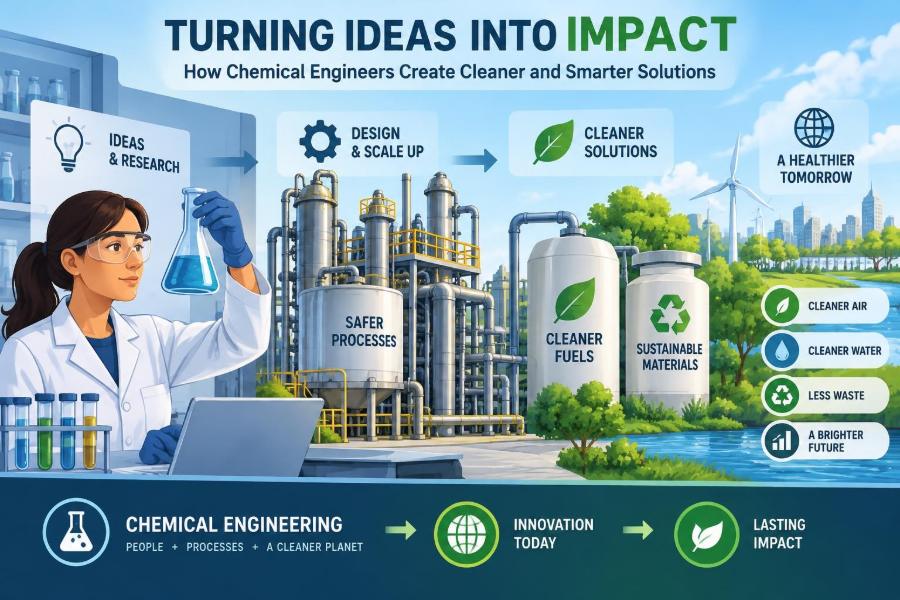
🧪 Turning Ideas into Impact: How Chemical Engineers Create Cleaner and Smarter Solutions
Posted inFeatured

🧪 Turning Ideas into Impact: How Chemical Engineers Create Cleaner and Smarter Solutions

Posted by admin October 24, 2026
From reactors and recycling to sensors and safer design, see how chemical engineers turn promising ideas into practical systems with fewer avoidable impacts. ♻️⚙️🔬
Read More
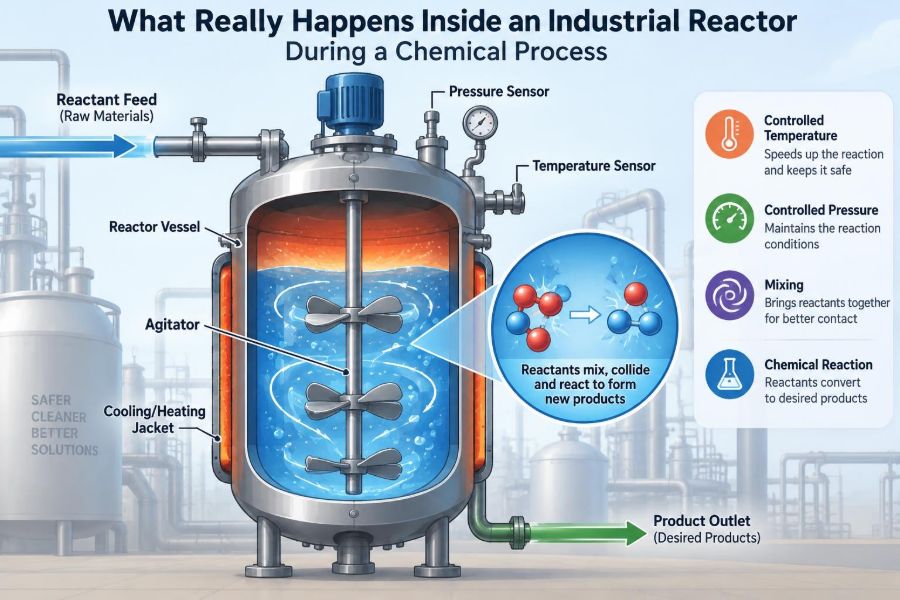
🧪 What Really Happens Inside an Industrial Reactor During a Chemical Process
Posted inFeatured

🧪 What Really Happens Inside an Industrial Reactor During a Chemical Process

Posted by admin October 22, 2026
From molecular collisions to heat removal and control loops, see why an industrial reactor is far more than a tank. Learn the forces that shape yield, quality, and safety. ⚗️🌡️⚙️
Read More
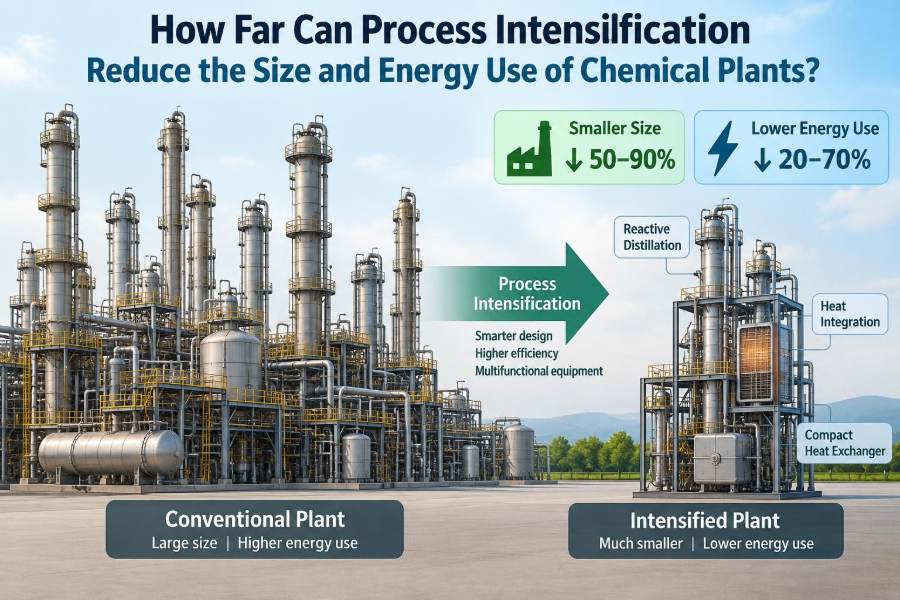
🧪 How Far Can Process Intensification Reduce the Size and Energy Use of Chemical Plants?
Posted inFeatured

🧪 How Far Can Process Intensification Reduce the Size and Energy Use of Chemical Plants?

Posted by admin October 20, 2026
Compact reactors, integrated separations, and smarter heat recovery can reshape plant design—but where do fouling, control, and thermodynamics set the limits? Explore the trade-offs. 🌍🔬
Read More
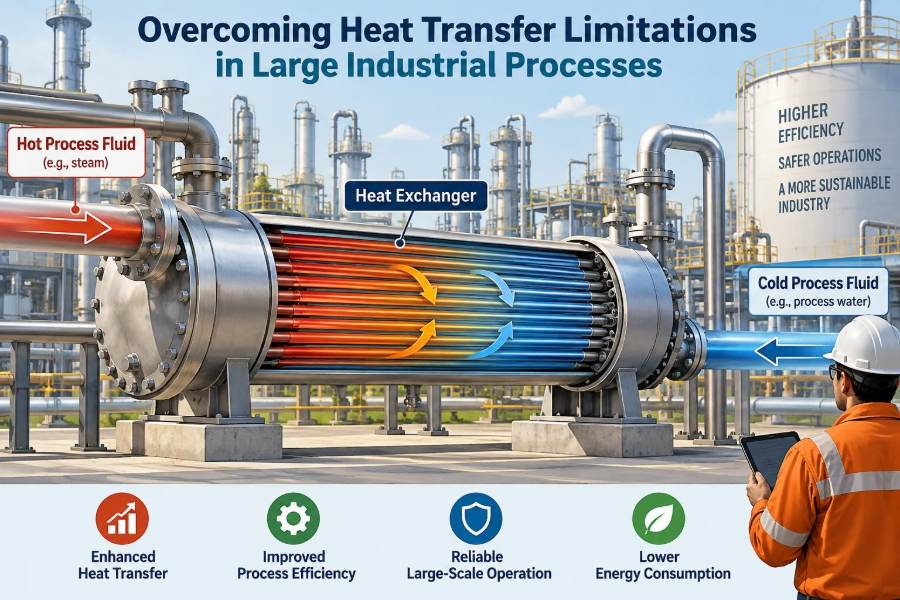
🧪 Overcoming Heat Transfer Limitations in Large Industrial Processes
Posted inFeatured

🧪 Overcoming Heat Transfer Limitations in Large Industrial Processes

Posted by admin October 19, 2026
Heat duty is only one part of the problem. Learn how fouling, flow, utilities, mixing, and scale can constrain industrial heating and cooling—and how to diagnose the true bottleneck. 🧪🏭📈
Read More
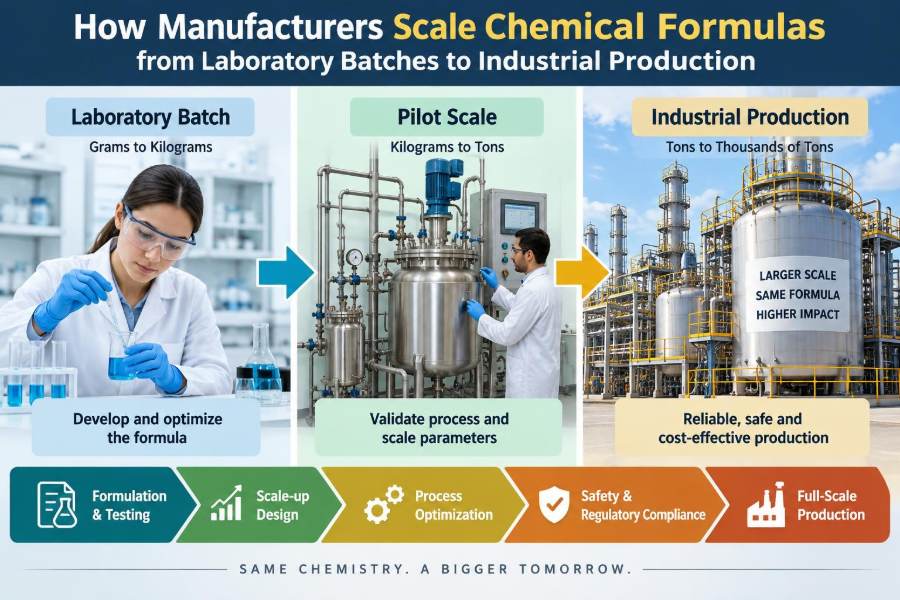
🧪 How Manufacturers Scale Chemical Formulas from Laboratory Batches to Industrial Production
Posted inFeatured

🧪 How Manufacturers Scale Chemical Formulas from Laboratory Batches to Industrial Production

Posted by admin October 18, 2026
A bigger reactor changes heat flow, mixing, safety, and quality control. Learn how engineers turn a promising bench formula into reliable industrial production. 🏭⚗️📈
Read More
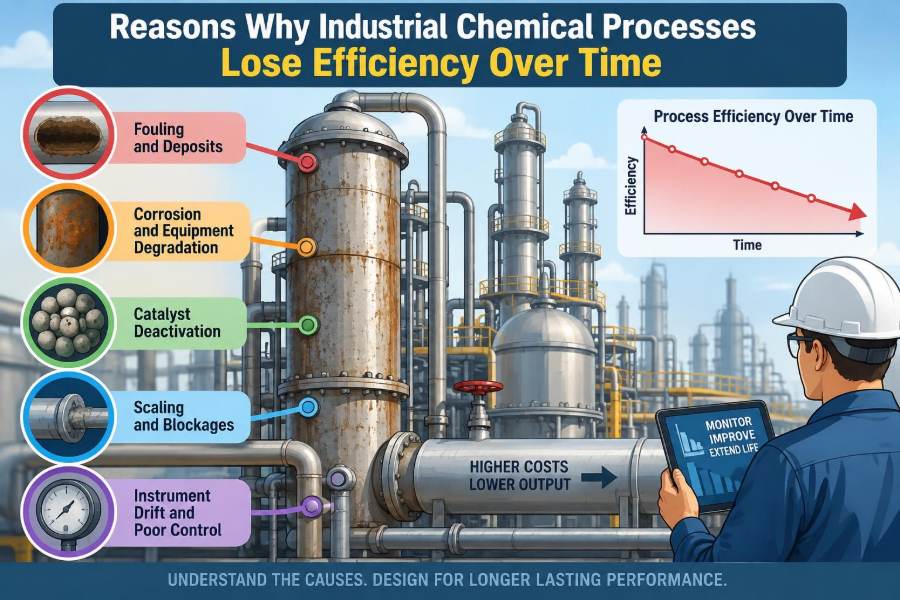
🧪 Reasons Why Industrial Chemical Processes Lose Efficiency Over Time
Posted inFeatured

🧪 Reasons Why Industrial Chemical Processes Lose Efficiency Over Time

Posted by admin October 17, 2026
Higher steam use, creeping pressure drop, and unstable quality often have a physical cause. Learn what changes inside process units—and how to diagnose it early. ⚙️📉🔍
Read More
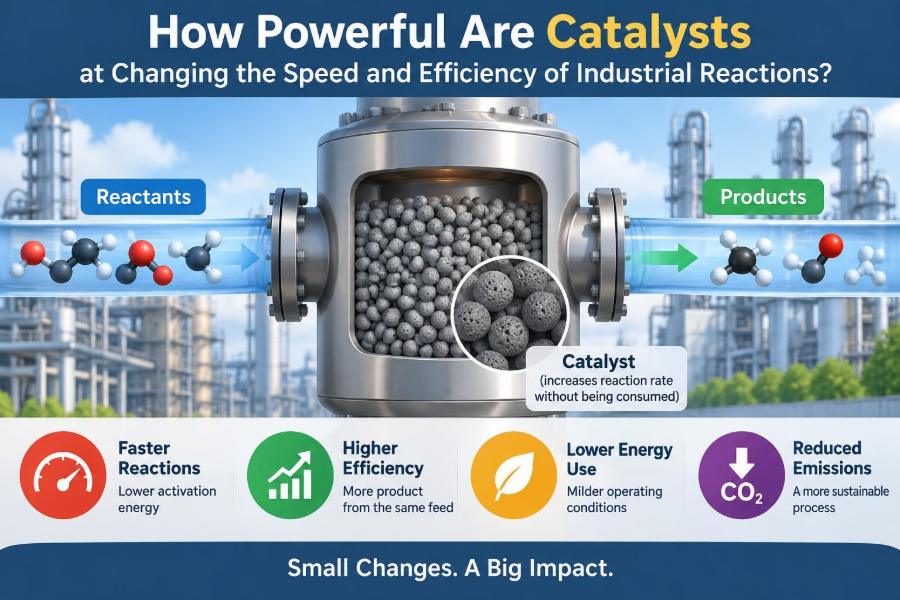
🧪 How Powerful Are Catalysts at Changing the Speed and Efficiency of Industrial Reactions?
Posted inFeatured

🧪 How Powerful Are Catalysts at Changing the Speed and Efficiency of Industrial Reactions?

Posted by admin October 16, 2026
From ammonia plants to catalytic converters, learn how catalysts change rate, selectivity, energy use, equipment size, and safety—and where their limits begin. 🏭🔬♻️
Read More
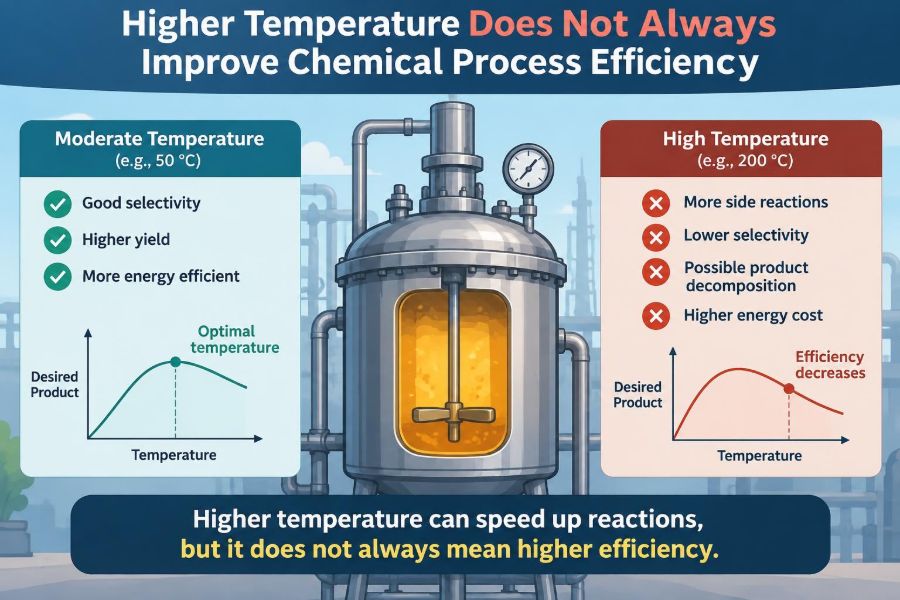
🧪 Debunking the Myth That Higher Temperature Always Improves Chemical Process Efficiency
Posted inFeatured

🧪 Debunking the Myth That Higher Temperature Always Improves Chemical Process Efficiency

Posted by admin October 15, 2026
Higher temperature can speed reactions—but it may also hurt yield, equilibrium, catalysts, safety, and energy use. Learn what engineers must check before raising the setpoint. ⚗️📉⚙️
Read More
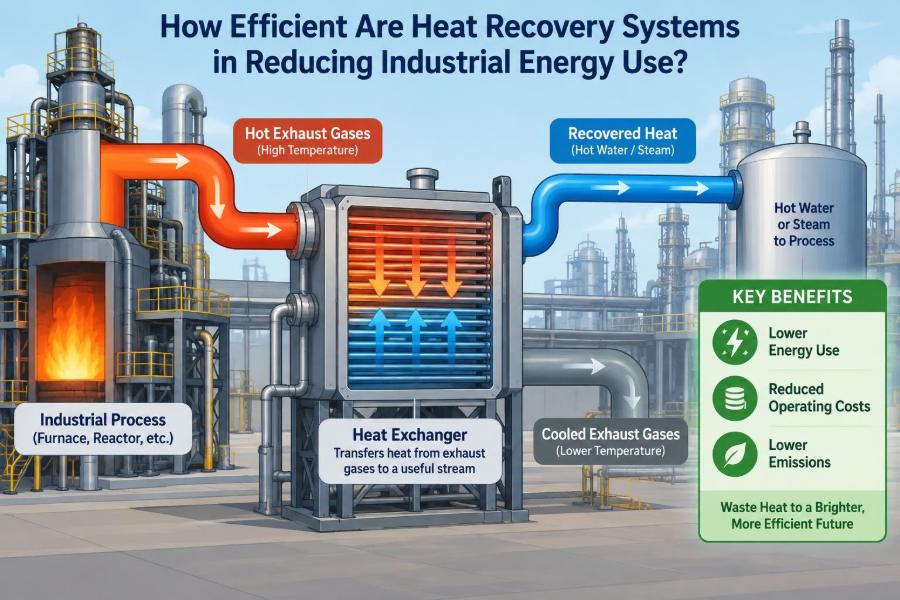
🧪 How Efficient Are Heat Recovery Systems in Reducing Industrial Energy Use?
Posted inFeatured

🧪 How Efficient Are Heat Recovery Systems in Reducing Industrial Energy Use?

Posted by admin October 14, 2026
Hot exhaust, condensate, and process streams can cut utility demand—but only when temperature, timing, fouling, and controls align. Learn the engineering trade-offs. 🧪⚙️🌍
Read More

Posts pagination

1 2 3 4 Next page

Recent Posts

  • 🧪 Turning Ideas into Impact: How Chemical Engineers Create Cleaner and Smarter Solutions
  • 🧪 How to Estimate Pressure Drop in Pipes Before It Becomes a Process Problem
  • 🧪 What Really Happens Inside an Industrial Reactor During a Chemical Process
  • 🧪 How Far Can Process Intensification Reduce the Size and Energy Use of Chemical Plants?
  • 🧪 How to Make an Industrial Process More Efficient by Reducing Heat and Material Losses

Recent Comments

No comments to show.

Archives

  • October 2026
  • September 2026
  • August 2026
  • March 2025
  • February 2025
  • February 2022
  • January 2022
  • November 2021
  • October 2021
  • August 2021

Categories

  • advanced_concepts
  • Chemical Engineering Softwares
  • Chemical Process Calculation
  • Featured
  • General Concepts
  • heat transfer
  • Mass Transfer
  • Material Science
  • Mechanics of Solids
  • Mineral Processing
  • NanoTechnology
  • Organic Chemistry
  • Physical Chemistry
  • Quality Management
  • Uncategorized
Copyright 2026 — Chemical Engineering. All rights reserved. Bloghash WordPress Theme
Scroll to Top